
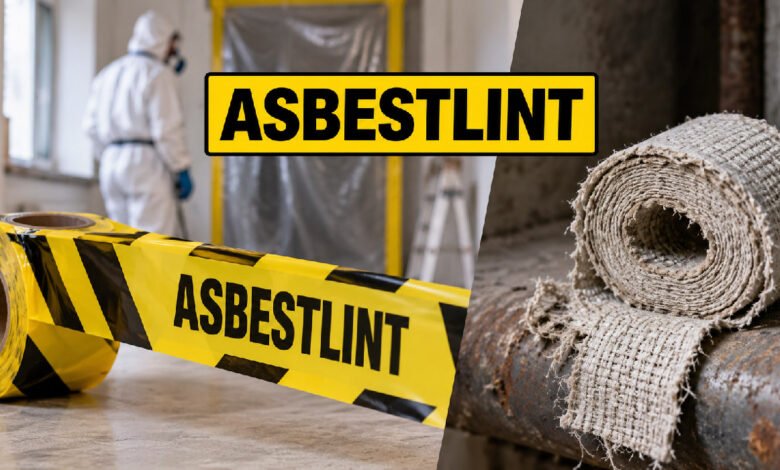
Asbestlint is a term that can have different meanings depending on where and how it is used. In the Netherlands, people may use the word when talking about warning tape placed around an area where asbestos is present or suspected. This type of product may also be called asbest-afzetlint. It creates a visible boundary and warns workers, visitors, and other people not to enter a controlled area without permission.
The word can also appear in discussions about older asbestos textile products. Asbestos fibers were historically made into woven materials, including tape, cloth, rope, cord, and packing products. These materials were valued because asbestos could tolerate high temperatures. An old woven strip found around industrial equipment, heating systems, pipes, or machinery can therefore have a very different meaning from modern plastic warning tape.
Understanding this difference is important. Modern warning tape is designed to communicate that an asbestos hazard may exist nearby, while historical asbestos tape may itself contain asbestos fibers. The word alone cannot tell you exactly what material you have found. Its location, age, purpose, construction, and condition all provide useful context, but suspected asbestos-containing material should not be identified by appearance alone.
The Two Main Meanings of Asbestlint
The first and most practical meaning of asbestlint is asbestos warning or barrier tape. It is normally a lightweight plastic tape with a highly visible design and a clear asbestos warning. Workers can place it around a restricted work area or across an entrance to show that access is controlled. The tape acts as a visual warning rather than as a material that removes or contains asbestos fibers.
The second meaning relates to historical woven asbestos products. Manufacturers once produced asbestos textiles because the mineral fibers offered useful resistance to heat and fire. Tape made from asbestos fibers could be wrapped around hot components or incorporated into equipment where ordinary textile materials were unsuitable. Some of these products can remain in older buildings, ships, factories, heating equipment, and industrial installations many years after their original use.
These meanings should never be confused. Finding a new roll of printed plastic tape at a modern worksite is completely different from discovering an old, deteriorated woven strip around a boiler or pipe. Modern tape usually identifies a hazard somewhere in the controlled area. Historical asbestos-containing tape can be the hazardous material itself. When the nature of an old material is uncertain, professional assessment is safer than making assumptions from its name or appearance.
What Is Asbest-Afzetlint?
Asbest-afzetlint is a Dutch term commonly associated with barrier or warning tape used to identify an area affected by asbestos work or a suspected asbestos hazard. Its purpose is straightforward: it helps prevent people from entering a restricted location without realizing that special safety rules apply. Bright colors and repeated warning text make the boundary easier to recognize from different directions.
This tape may be placed around temporary work zones, entrances, storage areas, or other controlled locations. Depending on the site, workers may attach it to posts, barriers, or other suitable fixed points. It can also be combined with warning signs and stronger physical access controls. The exact arrangement depends on the work being performed and the safety requirements that apply to that particular situation.
Asbest-afzetlint should never be viewed as complete asbestos protection. It does not clean contaminated air, capture microscopic fibers, seal damaged asbestos, or make contaminated material harmless. It is primarily an access-warning measure. Asbestos work may require additional controls, professional assessment, containment, protective equipment, and specific work procedures. The tape is useful because it communicates danger clearly, but the actual asbestos risk must be managed separately.
What Does Modern Asbestlint Look Like?
Modern asbestlint is generally designed to be noticed quickly. Commercial products commonly use contrasting colors, such as yellow and black, together with repeated asbestos-related warning text. The exact appearance varies between manufacturers and suppliers. The important feature is that someone approaching the boundary should be able to recognize that the area has a specific hazard and that unrestricted entry is not appropriate.
Most modern barrier tape is made from flexible plastic rather than asbestos textile. It is supplied on rolls so workers can mark large or irregular areas without installing a permanent barrier. Width, thickness, roll length, wording, and plastic composition can differ by product. Some tapes are intended mainly for short-term indoor use, while the suitability of any product for outdoor conditions depends on its design and manufacturer specifications.
The appearance of modern warning tape also helps separate it from historical asbestos textile products. A new printed plastic strip with clear warnings is very different from an old woven material attached to equipment. However, appearance should not be used to determine whether an unknown historical textile contains asbestos. Old fiberglass, ceramic fiber, and other heat-resistant materials may resemble asbestos products, especially after years of dirt, heat exposure, and deterioration.
Where Is Asbestlint Used?
Modern asbestos warning tape may be used wherever access needs to be restricted because of asbestos-related work or a suspected asbestos problem. Examples include building surveys, maintenance areas, renovation sites, removal projects, and temporary emergency zones. The objective is to prevent workers, occupants, contractors, or visitors from accidentally walking into a place where additional controls or permission may be required.
Barrier tape can also help identify routes and separate controlled areas from normal working spaces. During a larger project, different areas may be used for equipment, waste handling, controlled access, or other site activities. Clear boundaries can make the organization of the site easier to understand. Warning tape is especially useful when people who are not directly involved in asbestos work could otherwise approach the area without recognizing the potential hazard.
The appropriate boundary depends on the situation. A small strip of tape across a doorway is not automatically suitable for every asbestos hazard. Some circumstances may require locked access, rigid barriers, sealed enclosures, warning signs, controlled entry procedures, or other measures. Anyone managing asbestos work should therefore treat asbestlint as one part of a wider safety system rather than as a universal solution for controlling exposure.
What Asbestlint Cannot Do
One of the most important facts about modern asbestlint is that it does not control airborne asbestos fibers. The tape creates a visible boundary, but air can move above, below, and around it. If asbestos fibers have been released, placing warning tape nearby does not capture them or remove contamination. Proper asbestos controls are based on the condition of the material, the work being performed, and the applicable safety requirements.
Asbestlint also cannot replace respiratory protection, protective clothing, suitable containment, decontamination procedures, specialist cleaning, or other controls when these measures are required. It does not provide evidence that an area is safe simply because the tape has later been removed. Decisions about access after asbestos work should follow the appropriate professional procedures and legal requirements rather than being based on whether a visible barrier is still present.
The tape should therefore be understood as a communication and access-control tool. Its job is to tell people that they should not casually enter a particular area. This distinction matters because a visible barrier can create false confidence if people assume it physically contains the hazard. Effective asbestos management depends on identifying the material, assessing its condition and risk, preventing unnecessary disturbance, and applying suitable controls for the specific circumstances.
What Was Historical Asbestos Textile Tape?
Asbestos is the general name for a group of naturally occurring fibrous minerals. Historically, asbestos was valued because its fibers had useful properties, including resistance to heat. Manufacturers incorporated the fibers into many building and industrial products. Asbestos could also be spun or woven, allowing manufacturers to create flexible textile products such as cloth, cord, rope, packing, and tape for specialized applications.
Woven asbestos tape was particularly useful where ordinary textile material could be damaged by high temperatures. Depending on the product and application, asbestos textile materials could be associated with thermal insulation, sealing, wrapping, or heat protection. They appeared in industrial and mechanical environments where equipment generated substantial heat. Their flexibility allowed woven material to be fitted around shapes that would have been difficult to cover using rigid insulation products.
These historical products should not be confused with modern asbestos warning tape. The older product was made for a functional purpose such as insulation or heat resistance, whereas modern barrier tape is intended to communicate a warning. Historical asbestos textile materials can remain in service or be discovered during maintenance and renovation. Their age does not prove their composition, however, so an unknown woven material requires proper identification when asbestos is reasonably suspected.
Where Can Old Asbestos Tape Be Found?
Historical asbestos textiles can be associated with places where heat resistance, insulation, or sealing was needed. Depending on the age and design of an installation, old woven materials may be encountered around boilers, furnaces, heating systems, pipes, ducts, machinery, and other industrial equipment. Similar products were also used in some maritime, manufacturing, electrical, and mechanical applications where exposure to heat created demanding operating conditions.
The likelihood of encountering asbestos-containing materials generally increases when dealing with older structures and equipment from periods when asbestos use was common. In the Netherlands, asbestos was banned in 1993, making the age of a building or installation useful background information. Age alone is not proof, however. Older equipment can contain asbestos-free materials, while modifications and repairs may have introduced newer products alongside original components.
Location can provide clues about what an old textile was designed to do, but it cannot establish its composition. A woven strip beside a hot pipe may have been installed as heat-resistant material, yet several non-asbestos materials can serve similar purposes. If the material is old, unknown, and located where asbestos products were historically used, it is sensible to avoid unnecessary disturbance until reliable information or an appropriate professional assessment is available.
What Does Old Asbestos Tape Look Like?
Historical asbestos tape may have a woven, fabric-like appearance. Depending on the product, it can resemble thick cloth, webbing, ribbon, bandage material, rope, or a textured strip wrapped around a component. Years of use can alter its original appearance. Heat, dirt, oil, paint, moisture, repairs, and general aging may cause old textile materials to look gray, brown, white, off-white, stained, dusty, or discolored.
Condition is also highly variable. Some old woven material may remain firmly attached, while other material may be frayed, torn, brittle, or partially detached. Damaged edges can expose individual fibers, but visible fibers do not prove that those fibers are asbestos. Fiberglass and other heat-resistant textiles can develop a similar appearance, particularly when they have been installed in industrial environments for many years.
For this reason, photographs and visual comparisons have serious limitations. A picture may help a professional understand the location and general type of material, but it cannot reliably establish fiber composition. Color is equally unreliable because aging and contamination can change how materials look. When confirmation is necessary, appropriate sampling and laboratory analysis are more reliable than trying to recognize asbestos from texture, color, age, or photographs alone.
Asbestlint Compared With Fiberglass Tape
Fiberglass is one reason visual asbestos identification can be difficult. Like asbestos textiles, fiberglass products can be woven into cloth, tape, rope, and other heat-resistant forms. Both materials may appear pale, fibrous, and fabric-like. Once installed around machinery or heating equipment, years of dirt and heat exposure can make the visual differences even less obvious to someone without appropriate material information or professional experience.
The important difference is their composition. Asbestos products contain mineral asbestos fibers, while fiberglass products are manufactured from glass fibers. Their health hazards and handling requirements are not identical. It is therefore unsafe to decide that an old woven strip is harmless simply because it resembles modern fiberglass. The reverse is also true: an old woven material should not automatically be described as asbestos merely because its appearance resembles photographs of asbestos tape.
Labels, equipment records, installation dates, building documentation, and professional surveys can sometimes provide useful evidence about a material. When those sources cannot establish what it is and asbestos remains a realistic possibility, appropriate analysis may be required. This approach is more dependable than home identification methods. An unknown textile should not be cut, torn, scraped, burned, or otherwise disturbed simply to see how it behaves.
Can You Identify Asbestos Tape by Looking at It?
Visual inspection alone cannot reliably confirm that a woven material contains asbestos. Asbestos was incorporated into many different products, and the final appearance depended on how those products were manufactured and used. At the same time, asbestos-free materials can have very similar textures and colors. Even an experienced person may need product documentation, a survey, or laboratory results before the composition can be established with confidence.
Home tests based on burning, breaking, rubbing, or pulling fibers should not be used. Such actions can damage a material that might contain asbestos and potentially release fibers. Color tests are also unreliable. There is no simple rule such as “white woven tape contains asbestos” that can safely identify every unknown product. Paint, dust, age, and environmental conditions can further change the original appearance.
A professional asbestos assessment focuses on more than appearance. The assessor can consider the age of the property or equipment, location of the material, historical use, condition, surrounding components, and available records. Where testing is appropriate, a representative sample can be handled according to relevant procedures and examined by a laboratory. Until the material has been properly assessed, avoiding unnecessary disturbance is a sensible precaution.
What Should You Do If You Find Suspected Asbestlint?
If you discover an old woven material that you believe could contain asbestos, avoid disturbing it unnecessarily. Stop work that could cut, break, scrape, drill, sand, pull, or otherwise damage the material. Do not remove a piece simply to inspect it more closely. Disturbance matters because asbestos becomes an inhalation concern when respirable fibers are released into the air and people are exposed to them.
Access to the immediate area may need to be controlled while the situation is assessed. In a workplace, the responsible manager, employer, building owner, or safety professional should be informed through the appropriate procedure. In a home, the property owner can seek advice from an appropriate asbestos professional or relevant local authority. The exact action depends on the material, its condition, planned work, and applicable local requirements.
Avoid ordinary cleaning methods that could spread suspected asbestos dust. Sweeping, dry brushing, or using equipment that is not suitable for asbestos contamination can move fibers rather than safely control them. Professional advice is particularly important when material is damaged or renovation work has already disturbed it. Modern asbestlint may be used to warn people away, but placing tape around the location does not itself resolve possible contamination.
Is Asbestlint Dangerous?
Whether asbestlint represents an asbestos exposure hazard depends on which meaning of the word is intended. Modern plastic asbestos warning tape is a marking product. Its purpose is to warn about a potentially hazardous area; it should not be confused with the asbestos-containing material being managed. Normal commercial warning tape is therefore fundamentally different from historical textile products manufactured using asbestos fibers.
Old asbestos-containing tape requires a different assessment. Asbestos presents a health risk primarily when fibers become airborne and are inhaled. The likelihood of fiber release depends on factors such as the material’s composition, condition, and the way it is handled. Cutting, grinding, sanding, tearing, or other aggressive disturbance can be particularly concerning because these activities can damage asbestos-containing material and release fibers.
The discovery of asbestos does not by itself mean that everyone nearby has received a harmful exposure or will develop an asbestos-related disease. Exposure circumstances matter. However, uncertainty should not be used as a reason to disturb suspected material. Identifying the product, controlling access when appropriate, and obtaining competent advice allow decisions to be based on evidence rather than fear, appearance, or assumptions about the word asbestlint.
Health Risks Associated With Asbestos Exposure
Asbestos exposure is an established occupational and public health concern. When sufficiently small asbestos fibers become airborne, they can be inhaled into the respiratory system. Exposure has been associated with serious diseases including mesothelioma, lung cancer, and asbestosis. These health effects are one reason asbestos-containing materials are subject to strict controls in many countries and why unnecessary disturbance should be avoided.
Asbestos-related diseases often have long latency periods, meaning they can develop many years after exposure. Individual risk is not determined simply by seeing an asbestos-containing product. Factors such as the amount of airborne fibers, frequency and duration of exposure, type of work, and other personal risk factors can influence overall risk. Medical questions about a known or significant exposure should be discussed with an appropriate healthcare professional.
It is also useful to distinguish asbestos fibers from ordinary household lint. Everyday lint normally comes from clothing, towels, carpets, bedding, and other common textiles. Asbestos fibers originate from asbestos-containing minerals and products. Calling asbestos-related material “lint” can therefore be misleading if it makes the material sound harmless. When the term asbestlint appears online, understanding the actual product being discussed is more important than interpreting the word literally.
Asbestlint and Asbestos Rules in the Netherlands
The Netherlands has specific legal requirements for asbestos management and removal. Asbestos was banned in the country in 1993, but asbestos-containing products remain present in many older buildings and installations. As a result, renovation, demolition, maintenance, and removal projects involving older materials may require asbestos-related checks and procedures before work can safely and legally continue.
The rules that apply depend on factors including who is carrying out the work, the type of material, the project, and the removal situation. Certain asbestos removal activities require professional assessment and certified companies, while limited exceptions can exist for private individuals under specified conditions. Notification, asbestos inventories, workplace controls, waste handling, and other legal obligations can also apply depending on the circumstances.
Because legal requirements can change, anyone planning asbestos-related work should check current information from authoritative Dutch sources such as the Government of the Netherlands, the Netherlands Labour Inspectorate, and the relevant municipality or environmental authority. A commercial roll of asbest-afzetlint does not provide permission to remove asbestos. Warning tape controls access; compliance with asbestos law requires following the rules that apply to the actual material and work.
Can Homeowners Remove Asbestlint Themselves?
If asbestlint means modern plastic warning tape, removing or placing the tape itself is not the same as performing asbestos removal. If the term refers to old woven material that may contain asbestos, the situation is very different. A homeowner should not assume that a small quantity, easy access, or apparently good condition automatically makes the material suitable for do-it-yourself removal.
Dutch rules provide limited circumstances in which private individuals may remove certain asbestos-containing materials themselves, but conditions and restrictions apply. Many asbestos situations require professional involvement. The type of product, how it is fixed, its condition, the quantity involved, and the nature of the work can affect what is permitted. Local notification and disposal requirements may also be relevant to a particular project.
For that reason, homeowners should establish what material they are dealing with before planning removal. Current government and municipal guidance is more reliable than general online advice because legal requirements can be updated. If old woven tape is damaged, deteriorated, or attached to equipment in a way that would require significant disturbance, professional assessment is particularly important. Warning tape can restrict access temporarily, but it is not a substitute for lawful asbestos management.
How Professionals Test Suspected Asbestos Tape
When an unknown material requires confirmation, an asbestos professional can assess the location, age, condition, and likely historical use of the product. Existing asbestos surveys, equipment records, renovation documents, or manufacturer information may also provide useful evidence. The purpose of this initial assessment is to understand what the material could be and determine the appropriate way to investigate it without creating unnecessary disturbance.
Where laboratory testing is needed, a suitable sample can be collected and analyzed using recognized methods. Laboratory examination can determine whether asbestos fibers are present and, where relevant, identify the asbestos type. This is much more reliable than judging a product from its color or weave. Sampling itself can disturb material, which is why people should not casually cut pieces from suspected asbestos products for home experimentation.
The test result can then support decisions about management, maintenance, or removal. A positive result does not mean the same response is appropriate in every case, because condition, location, future disturbance, and applicable regulations also matter. Similarly, an untested material should not automatically be labelled asbestos in factual documentation. Proper identification gives property owners and professionals a stronger basis for choosing proportionate and legally appropriate controls.
How Asbestlint Is Used During Professional Asbestos Work
During asbestos-related work, modern warning tape can help define a boundary that people should not cross without authorization. It may be used near entrances, temporary work areas, or other points where a visible warning is helpful. Repeated asbestos wording makes the nature of the restriction clearer than ordinary barrier tape that simply indicates a general closed area.
Professional asbestos work can require much more than a visual boundary. Depending on the task and risk, controls may include restricted access, warning signs, enclosures, suitable work methods, personal protective equipment, decontamination arrangements, waste controls, and other measures. The required system should be based on the work being carried out rather than on the presence of warning tape.
The boundary also needs to remain understandable throughout the job. Loose, damaged, hidden, or poorly positioned tape may fail to warn approaching people effectively. Site managers should therefore ensure that access controls remain appropriate for changing work conditions. Once again, asbestlint is best understood as a communication tool within a larger safety system. It tells people where restrictions begin, while other controls address the actual possibility of asbestos exposure.
Conculsion
Asbestlint is easier to understand once its two possible meanings are separated. Modern asbest-afzetlint is a warning and access-control product used to identify asbestos-related restricted areas. Historical asbestos textile tape is a different material that was manufactured for heat-resistant, insulating, sealing, or similar purposes. Confusing these products can lead to incorrect assumptions about both their function and their potential hazards.
When old woven material is discovered, appearance alone cannot confirm whether it contains asbestos. Fiberglass and other textile products can look similar, particularly after decades of use. Avoiding unnecessary disturbance is therefore important when asbestos is reasonably suspected. Appropriate records, professional assessment, and laboratory analysis can provide more reliable information and help determine what action, if any, is required.
Modern warning tape remains useful because clear boundaries can prevent accidental access to controlled areas, but it does not remove or contain asbestos fibers. Effective asbestos safety depends on identifying materials correctly, assessing their condition, following suitable work practices, and complying with current local requirements. In the Netherlands, authoritative government and workplace-safety guidance should be checked before asbestos-related removal, renovation, or demolition work begins.
FAQs
What is asbestlint?
Asbestlint can refer to asbestos warning tape used to mark restricted areas or, in some historical contexts, woven tape made with asbestos fibers. The correct meaning depends on the material, its age, and where it is found.
Does modern asbestlint contain asbestos?
Modern asbestlint used as warning or barrier tape is generally made from plastic and is designed to identify an asbestos-related restricted area. It should not be confused with historical woven asbestos tape, which may contain asbestos fibers.
How can I tell if old tape contains asbestos?
You cannot reliably identify asbestos tape from its color, texture, or appearance alone. Fiberglass and other materials can look similar. If an old woven material is suspected of containing asbestos, avoid disturbing it and seek appropriate professional assessment and laboratory testing.
Is asbestos lint dangerous to touch?
Modern plastic warning tape is not the same as asbestos-containing material. Historical woven tape that contains asbestos can present a risk if fibers are released, particularly when it is damaged or disturbed. Avoid cutting, tearing, sanding, or scraping suspected asbestos material.
What should I do if I find suspected asbestos tape?
Avoid disturbing the material and keep people away from the immediate area when appropriate. Do not cut off a sample or clean suspected asbestos dust using ordinary methods. Contact a qualified asbestos professional and follow the asbestos requirements that apply in your location.

