
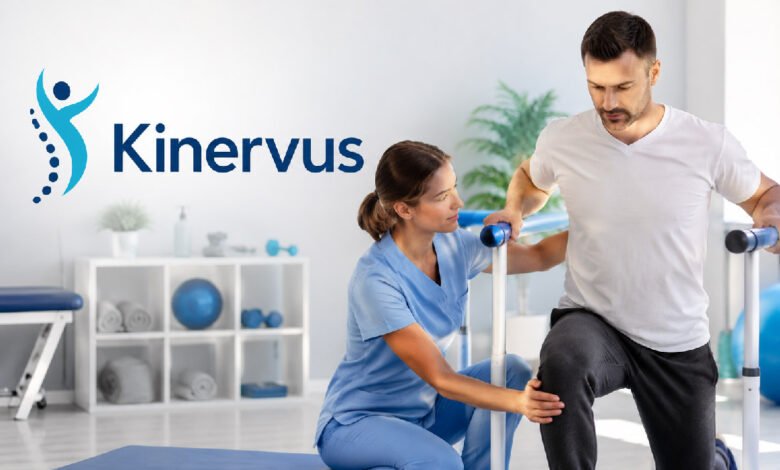
A movement that feels easy to one person can become a major challenge for someone recovering from illness, injury, or a neurological condition. Walking across a room, standing from a chair, holding a cup, or writing with a pen may require considerable effort. Kinervus is a physiotherapy and rehabilitation practice in Alken, Limburg, Belgium, that focuses on helping adults and children manage these kinds of movement difficulties.
Kinervus provides several forms of specialised physiotherapy. Its main areas include neurological rehabilitation, paediatric physiotherapy, manual lymphatic drainage, and supervised group exercise. Rather than giving every patient the same routine, treatment is shaped around the individual’s condition, physical abilities, limitations, and everyday needs.
The central idea behind rehabilitation at Kinervus is practical improvement. Therapy is not only about completing exercises inside a clinic. It is also about helping people move more safely, maintain useful physical abilities, improve independence, and take part in daily activities with greater confidence.
What Is Kinervus?
Kinervus is a physiotherapy and rehabilitation practice located in Alken in the Belgian province of Limburg. It works with people who may experience movement difficulties because of neurological conditions, developmental challenges, swelling caused by lymphatic problems, or other physical limitations. Both adults and children can receive specialised support depending on their individual needs.
Neurological physiotherapy is one of the important areas connected with Kinervus. This form of rehabilitation focuses on conditions involving the brain, spinal cord, nerves, or neuromuscular system. Such conditions can affect strength, balance, coordination, posture, walking, hand movement, and many ordinary activities that people normally perform without thinking.
Kinervus also provides paediatric rehabilitation and lymphatic care. Group exercise programmes add another option for people who benefit from supervised physical activity. These different services share one important principle: rehabilitation should be adapted to the person rather than forcing every patient into one standard programme.
The Background of Kinervus
Kinervus was established in 2019 by physiotherapist Stefanie Ver Eecken. The practice developed in Alken with a strong interest in specialised rehabilitation, particularly neurological physiotherapy. Over time, its services expanded to support patients with different physical, neurological, and developmental rehabilitation needs.
The development of Kinervus reflects an important feature of modern physiotherapy. Many patients need more than short-term pain treatment. Someone living with a neurological condition may require continued support for balance, walking, strength, posture, hand control, or maintaining movement over time. Children can also need specialised therapy because their physical development differs significantly from that of adults.
By bringing different rehabilitation areas together, Kinervus can address several kinds of movement-related challenges. Its services include individual therapy as well as supervised group activities. The treatment approach remains centred on personal goals because two patients with the same diagnosis can still have very different symptoms, abilities, lifestyles, and priorities.
Neurological Rehabilitation at Kinervus
Neurological rehabilitation supports people whose movement has been affected by a condition involving the nervous system. The nervous system includes the brain, spinal cord, and nerves that help control movement and sensation. When part of this system is damaged or affected by disease, ordinary movements can become slower, weaker, less coordinated, or more difficult.
At Kinervus, neurological physiotherapy is mainly based on exercises selected according to the patient’s abilities and functional problems. A therapist may assess walking, posture, strength, balance, coordination, transfers, or arm and hand use. The purpose of the assessment is to understand which activities are difficult and which areas should receive the most attention.
Treatment goals can vary considerably. One patient may want to walk more safely after a stroke. Another may need to maintain movement while living with a progressive neurological condition. Rehabilitation may therefore focus on recovering lost abilities, improving existing abilities, or maintaining important functions for as long as possible.
Conditions That May Require Neurological Physiotherapy
Neurological physiotherapy can be relevant to a wide range of health conditions. People who have experienced a stroke may develop weakness, balance difficulties, altered coordination, or reduced control of one side of the body. Rehabilitation can focus on practising movements that are important for walking, transfers, standing, and everyday independence.
People living with Parkinson’s disease, multiple sclerosis, ALS, brain injuries, spinal cord conditions, nerve injuries, or neuromuscular disorders may also experience changing physical abilities. Kinervus provides neurological rehabilitation designed around the person’s actual difficulties rather than relying only on the medical diagnosis.
Balance disorders and certain forms of vertigo may also affect a person’s ability to move confidently. However, the correct approach always depends on the underlying cause. A professional assessment is important because neurological conditions can affect each person differently. Physiotherapy should therefore be based on individual examination, safety considerations, medical history, and realistic functional goals.
Exercise Therapy and Everyday Movement
Exercise therapy is an important part of rehabilitation at Kinervus. The exercises used during treatment are not simply intended to make a person tired or physically active. They are selected because they relate to specific movement difficulties, such as weakness, poor balance, reduced coordination, limited endurance, or difficulty completing an everyday task.
For example, someone who struggles to stand from a chair may practise movements that improve leg strength, balance, positioning, and control during the transition from sitting to standing. A person who has difficulty walking may work on stability, weight shifting, stepping, coordination, or endurance. Exercises can become easier or more difficult depending on progress.
Functional rehabilitation connects clinical exercise with normal life. The ability to walk to another room, get out of bed, dress independently, hold an object, or safely move around the home may matter more to a patient than achieving a particular exercise score. Kinervus therefore connects therapy with meaningful daily activities.
Balance, Walking, and Mobility Training
Balance is essential for many everyday movements. A person needs balance when standing still, turning, walking, bending, reaching, or moving between different positions. Neurological conditions can affect the systems that normally help the body remain stable, which can make movement more difficult and sometimes increase the risk of falling.
Balance training at Kinervus can involve controlled positions and movements that challenge stability at an appropriate level. The goal is not to place a patient in unsafe situations. Exercises should match physical ability and gradually develop better control, confidence, and awareness during movement.
Walking rehabilitation may involve more than repeatedly walking across a room. Therapists may consider posture, leg movement, weight transfer, coordination, speed, endurance, and the ability to change direction. Progress can be gradual. For some patients, improving walking is the goal, while for others maintaining their present mobility or learning safer movement strategies may be more realistic.
Arm and Hand Rehabilitation
Arm and hand movement plays a major role in independence. People use their hands to eat, dress, write, prepare food, use a phone, open doors, carry objects, and complete personal-care activities. Neurological conditions can affect strength, coordination, sensation, grip, or fine motor control, making these ordinary actions difficult.
At Kinervus, arm and hand rehabilitation can involve exercises designed around the patient’s particular limitation. One person may need to practise reaching accurately. Another may work on gripping and releasing an object. Someone experiencing reduced fine motor control may require tasks involving smaller and more precise movements.
Small improvements can have meaningful practical value. Being able to hold a cup more securely or use a hand during dressing can increase independence even if full function has not returned. Rehabilitation therefore does not need to produce dramatic changes to be useful. Functional improvements should be measured according to what they allow the individual to do.
Paediatric Physiotherapy at Kinervus
Children require a different rehabilitation approach because they are still developing physically and cognitively. A young child may not understand the purpose of repeating a traditional exercise. Kinervus therefore uses age-appropriate activities that can help children practise movement while keeping therapy understandable and engaging.
Paediatric physiotherapy may support children experiencing delayed motor development, coordination problems, difficulties with body awareness, posture concerns, laterality difficulties, or problems with writing and fine motor skills. Children with neurological conditions such as cerebral palsy or spina bifida may require more specialised neuromotor rehabilitation.
The purpose is not to expect every child to develop in exactly the same way or at exactly the same speed. Therapy focuses on the individual challenge and the skills that could improve participation in everyday life. A child’s goals may include better balance, easier movement at school, improved pencil control, greater independence, or increased confidence during play.
The Importance of Play in Children’s Rehabilitation
Play is an effective way of encouraging movement because it is familiar and meaningful to children. Instead of asking a child to complete a repetitive movement without context, a therapist can use games and activities that naturally require reaching, crawling, balancing, throwing, gripping, stepping, or coordinating different parts of the body.
At Kinervus, this type of approach can make rehabilitation feel less like a formal medical exercise session. The therapist can still work toward specific physical goals while allowing the child to participate in an activity that is suitable for their age and level of understanding.
Parents can also provide valuable information about how the child functions outside therapy. They may notice difficulties during dressing, play, walking, school activities, or other routines. When appropriate, communication between therapists, parents, teachers, and other healthcare professionals can make rehabilitation more consistent and help children practise useful skills in different environments.
Fine Motor Skills and Writing Difficulties
Fine motor skills involve small, controlled movements, especially those made with the hands and fingers. These skills are important for tasks such as handwriting, using scissors, fastening clothes, handling small objects, eating, and performing many school activities. Some children have difficulty coordinating these movements efficiently.
Kinervus may support children who experience writing or fine motor difficulties. Therapy can consider several areas instead of focusing only on how a child holds a pencil. Hand strength, finger control, sitting posture, visual coordination, shoulder stability, and general body position can all influence the way a child writes.
The specific reason behind the difficulty matters. Two children who both struggle with handwriting may need completely different forms of support. Assessment helps identify where the challenge lies. The aim is to help the child develop useful abilities and participate more comfortably in school and everyday activities without expecting identical progress from every child.
Manual Lymphatic Drainage at Kinervus
The lymphatic system helps manage fluid within the body and forms part of the immune system. Lymph moves through a network of vessels and lymph nodes. When normal lymphatic drainage is disrupted, fluid may collect in tissue and cause swelling. This type of swelling may be referred to as lymphoedema.
Kinervus provides manual lymphatic drainage as part of its physiotherapy services. The technique involves gentle, controlled movements designed to encourage lymphatic fluid movement. The practice uses an approach associated with the Vodder method, which is different from deep or forceful massage.
Treatment for swelling can involve more than manual techniques. Depending on the person’s condition and assessment, management may also include bandaging, kinesiology tape, exercise, movement advice, or other suitable measures. Treatment frequency is not identical for everyone. The underlying cause, severity of swelling, medical history, and response to treatment all influence the rehabilitation plan.
Why Swelling Requires Proper Assessment
Swelling can develop for many reasons, and lymphoedema is only one possibility. Surgery, injury, circulation problems, infection, medication, organ-related health conditions, and other medical issues can potentially contribute to swelling. For this reason, unexplained or newly developed swelling should not automatically be treated as a simple lymphatic problem.
Before beginning manual lymphatic drainage at Kinervus or another rehabilitation practice, appropriate assessment can help determine whether the treatment is suitable. Medical evaluation may also be necessary when the cause of swelling has not already been identified.
Professional assessment is particularly important because some conditions require medical care rather than massage or exercise alone. Patients should provide accurate information about their medical history, previous operations, symptoms, and changes in swelling. Safe rehabilitation depends on understanding the underlying problem as clearly as possible before selecting a treatment strategy.
Group Exercise and Rehabilitation
Individual physiotherapy allows treatment to concentrate closely on one person’s needs, but group rehabilitation offers different advantages. Kinervus provides supervised group sessions where participants can work on physical abilities while exercising in a social setting. The sessions generally last around 60 minutes according to the practice information.
Exercises can be modified for different physical abilities. This is particularly important in neurological rehabilitation because participants may have very different levels of mobility, strength, coordination, and endurance. Group exercise should therefore not be treated as a competition where everyone is expected to complete the same movements.
Group rehabilitation can also provide social interaction. Living with a long-term neurological condition may reduce opportunities for physical and community activities. Exercising alongside other people can create regular structure and encouragement. The clinical purpose, however, remains important: activities should be selected and supervised with each participant’s safety and rehabilitation needs in mind.
Balance and Fitness Group Sessions
Balance-focused group exercise can help participants practise stability during standing and controlled movement. Exercises may challenge the body in different positions while remaining appropriate for the person’s ability. Better balance can support confidence during everyday activities, although outcomes vary depending on the individual and underlying condition.
Fitness sessions at Kinervus focus on physical capacity and stamina. Activities can involve body-weight movements, exercise equipment, or light resistance. The intensity should be adjusted because neurological conditions may affect energy, muscle control, endurance, and recovery in different ways.
General fitness is useful because many everyday tasks require sustained physical effort. Walking outside, shopping, climbing steps, completing housework, or participating in community activities can become difficult when endurance is low. Supervised fitness work can therefore complement more specific rehabilitation goals while allowing the therapist to consider fatigue, movement quality, safety, and individual limitations.
Arm and Hand Group Training
Kinervus also uses group sessions focused on arm and hand function. Upper-limb movements are involved in almost every part of daily life, from preparing food to dressing and personal care. Training may therefore include reaching, gripping, releasing, coordination, controlled arm movement, and tasks that involve fine motor ability.
Group training does not mean every participant performs exactly the same activity. Someone with significant weakness may require a simpler movement, while another participant may be able to complete a more challenging coordination task. Therapists can modify exercises according to the person’s abilities.
The practical goal is to improve or maintain movement that has value outside the clinic. A stronger grip, more controlled reach, or improved hand coordination may make ordinary activities easier. For people with progressive neurological conditions, maintaining existing arm and hand abilities for as long as possible can also represent an important rehabilitation goal.
Non-Contact Boxing at Kinervus
Non-contact boxing provides a more energetic form of supervised exercise. Despite the name, participants are not fighting each other. Activities can involve punching pads, bags, or targets while following movement instructions. This allows boxing-style exercise to be used without direct physical combat.
At Kinervus, non-contact boxing can combine several physical and cognitive tasks. A participant may need to maintain balance, respond to instructions, coordinate the hands and eyes, remember movement sequences, adjust speed, and make quick movement decisions. The exercise can also contribute to general physical activity and stamina.
The activity should not be described as a cure for Parkinson’s disease or another neurological condition. Instead, it is one form of exercise that can be adapted within a broader rehabilitation programme. Whether it is suitable depends on the participant’s mobility, balance, medical condition, fitness level, and professional assessment.
Core+ and Postural Strength
Core muscles around the abdomen, back, pelvis, and trunk help the body remain stable during movement. People use these muscles when standing, walking, bending, reaching, lifting, turning, and changing positions. Weakness or poor trunk control can make these activities more difficult.
The Core+ class at Kinervus focuses on strengthening and controlling the muscles that contribute to stability and posture. Exercises can be adapted according to physical ability, making the class relevant to participants who need structured guidance rather than unsupervised general fitness.
Core training should still be connected with functional movement. The purpose is not simply to develop stronger abdominal muscles for appearance. Better trunk control can support posture and provide a more stable base for arm and leg movements. The exact benefit depends on the person’s health, physical limitations, rehabilitation needs, and consistency with appropriate exercise.
Why Personal Treatment Plans Matter
No two rehabilitation journeys are exactly alike. Even people diagnosed with the same condition can have very different symptoms. One person with Parkinson’s disease may mainly struggle with balance, while another may experience greater difficulty with walking or posture. Kinervus therefore bases rehabilitation around individual needs rather than diagnosis alone.
Age, medical history, strength, fatigue, confidence, lifestyle, work, school responsibilities, and family circumstances can all influence treatment. Personal goals also matter. A therapist may identify a clinical problem, but treatment becomes more meaningful when that problem is connected with something the patient actually wants or needs to do.
A realistic goal could be walking to a nearby shop, standing from a chair without assistance, holding a cup more securely, playing with other children, or writing more comfortably at school. Rehabilitation plans need regular review because abilities, health, and goals can change over time.
How Progress Is Measured at Kinervus
Rehabilitation progress does not always appear as a dramatic physical transformation. Small improvements can make an important difference in everyday life. Someone who can stand more safely, walk slightly farther, or use a hand more effectively may gain greater independence even when the underlying medical condition remains present.
At Kinervus, progress can be considered through changes in balance, strength, coordination, movement control, endurance, confidence, and ability to complete functional activities. The most meaningful measurement often depends on the patient’s original problem and personal goals.
Progress can also mean maintaining an ability rather than improving it. This is especially relevant for certain progressive neurological conditions. If treatment helps a patient remain active or preserve an important movement for longer, that may represent a valuable outcome. Rehabilitation should therefore be judged according to realistic individual goals rather than a single definition of success.
How Long Does Rehabilitation Take?
There is no standard rehabilitation timeline that applies to every patient. The amount of therapy required depends on factors such as the diagnosis, severity of the condition, age, general health, functional limitations, treatment goals, and how the person’s body responds to rehabilitation.
Some people receiving care at Kinervus may need treatment for a relatively limited period, while others living with long-term neurological conditions may benefit from ongoing or periodic rehabilitation. Progressive conditions can also require goals to change as physical abilities change.
The frequency of appointments can vary for the same reason. Individual physiotherapy, lymphatic treatment, and group sessions may follow different schedules. A qualified therapist should recommend frequency after assessing the person. Patients should avoid comparing their rehabilitation timeline too closely with someone else’s because similar diagnoses do not necessarily produce similar recovery patterns or treatment needs.
Individual Therapy Versus Group Rehabilitation
Individual treatment and group rehabilitation serve different purposes. During individual physiotherapy at Kinervus, the therapist can focus closely on one patient’s movement problems, limitations, and goals. Exercises can be adjusted immediately, and specific difficulties can receive detailed attention.
Group rehabilitation provides a different environment. Participants exercise with other people while still receiving professional guidance. This can make physical activity more social and structured. Different exercises may be adapted for participants depending on their level of movement, strength, balance, and endurance.
One approach is not automatically better than the other. Some patients may primarily need individual rehabilitation, while others may benefit from group exercise. Certain people may use both at different stages. The appropriate choice depends on the condition, safety, treatment objectives, abilities, and professional recommendation rather than a general rule that applies to everyone.
The Importance of Independence in Rehabilitation
One of the most meaningful aims of rehabilitation is helping people participate in everyday life as independently as possible. Independence does not necessarily mean doing everything without help. It can also mean needing less assistance or being able to participate more actively in an important activity.
For a patient at Kinervus, progress might involve moving safely around the home, getting dressed more easily, holding eating utensils, returning to a hobby, or walking with greater confidence. For a child, independence might mean taking part in playground activities, managing school tasks, or improving control during dressing and writing.
These practical goals show why rehabilitation extends beyond exercise performance. Strength and balance measurements are useful, but their real value comes from how they affect daily life. A small physical improvement may create a significant increase in confidence, participation, safety, or personal independence.
What Patients Can Expect From Rehabilitation
Rehabilitation usually begins with assessment. The therapist needs to understand the patient’s condition, symptoms, movement abilities, difficulties, and personal goals. Relevant medical information is also important because some illnesses or treatments can affect which exercises or techniques are safe.
After assessment, Kinervus can develop a treatment programme that matches the person’s needs. Sessions may involve movement practice, strength exercises, balance work, functional activities, hand training, paediatric exercises, lymphatic techniques, or supervised group rehabilitation depending on the reason for treatment.
The programme may change over time. An exercise that initially feels difficult may later become too easy, while new health problems or fatigue could require adjustments. Patients should communicate changes in symptoms, pain, falls, swelling, or general health. Effective rehabilitation depends on continued assessment rather than following the same routine indefinitely.
Where Is Kinervus Located?
Kinervus is located in Alken, a municipality in the province of Limburg in Belgium. The location makes the practice relevant to people seeking specialised physiotherapy and rehabilitation services within Alken and the surrounding Limburg region.
People interested in treatment should use the practice’s current official information when checking its exact address, appointment options, opening hours, or therapist availability. Operational details can change over time, so information shown on older directories or third-party websites may not always remain accurate.
Before arranging treatment, patients can also ask whether a particular service is appropriate for their needs and whether any referral or medical information is required. This can be particularly important for complex neurological conditions or unexplained swelling. Contacting the practice directly provides the best opportunity to confirm current services and practical appointment requirements.
Why Kinervus Focuses on Functional Goals
Rehabilitation is most useful when exercises connect with activities a person actually needs. Improving leg strength is valuable, but the patient may care most about being able to stand from a chair. Better hand coordination matters because it might help someone eat, write, dress, or use everyday objects with greater independence.
This functional approach is important at Kinervus because neurological and developmental conditions affect people differently. Treatment should therefore consider what the patient finds difficult rather than focusing only on medical labels or standard exercise programmes.
Goals can also change as treatment continues. Someone who initially needs help standing may later focus on walking. A child who develops better hand strength may move toward more precise writing tasks. Reviewing these goals allows rehabilitation to remain relevant. Successful physiotherapy is therefore not simply about completing sessions; it is about connecting physical improvements with meaningful everyday activities.
Final Thoughts
Kinervus is a specialised physiotherapy and rehabilitation practice in Alken, Limburg, Belgium. Its services bring together neurological rehabilitation, paediatric physiotherapy, manual lymphatic drainage, and supervised exercise. These areas may appear different, but they share an important aim: helping people manage movement difficulties in ways that are relevant to everyday life.
The personal approach used by Kinervus is particularly important in rehabilitation because diagnosis alone cannot explain what a patient can or cannot do. Age, strength, coordination, confidence, lifestyle, medical history, and individual goals all influence the most appropriate treatment programme.
Progress can mean different things for different people. It may involve walking more safely, maintaining strength, improving hand control, reducing functional limitations, or helping a child participate more comfortably in school and play. Rehabilitation can take time, but even small improvements can have genuine practical value.
(FAQs)
What is Kinervus?
Kinervus is a physiotherapy and rehabilitation practice in Alken, Limburg, Belgium. It provides support for adults and children who have neurological, physical, developmental, or movement-related difficulties.
What services does Kinervus offer?
Kinervus offers neurological rehabilitation, paediatric physiotherapy, manual lymphatic drainage, individual exercise therapy, and supervised group exercise. Treatment is adapted according to the patient’s condition and personal goals.
Does Kinervus provide neurological rehabilitation?
Yes. Kinervus provides neurological physiotherapy for people with conditions that can affect balance, walking, coordination, strength, posture, and daily movement. Treatment depends on individual assessment and needs.
Does Kinervus offer physiotherapy for children?
Yes. Kinervus provides paediatric physiotherapy for children with motor delays, coordination problems, writing difficulties, posture concerns, and some neurological conditions.
Where is Kinervus located?
Kinervus is located in Alken, in the Limburg province of Belgium. People interested in treatment should check the clinic’s official information for current contact details, opening hours, and appointment availability.

