
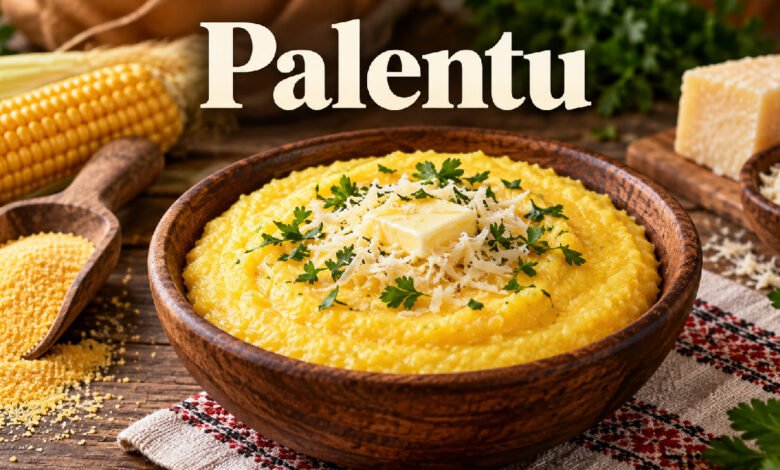
Palentu is a word closely connected with palenta, a South Slavic term used for polenta. More precisely, palentu can appear as the accusative singular form of palenta in Serbo-Croatian. This means Palentu is not necessarily the name of a separate dish. It can simply be a grammatical form of a familiar food word.
The food behind the term is a thick preparation usually made by cooking cornmeal in water or another liquid. It can be served soft and creamy immediately after cooking. Once cooled, it becomes firmer and can be cut into pieces for another cooking method.
Palentu is therefore interesting from both linguistic and culinary perspectives. Understanding the word leads naturally to traditional cornmeal dishes found in Balkan cooking and to polenta, which is especially well known through Italian cuisine.
What Does Palentu Mean?
The clearest way to understand Palentu is through the word palenta. In Serbo-Croatian, palenta refers to polenta, while palentu is used when the noun appears in the accusative singular case. The ending changes because nouns can take different forms according to their grammatical role in a sentence.
This explains why someone might see palentu in ordinary writing even though a dictionary is more likely to show palenta. The two forms do not automatically describe different foods. Instead, they can represent different grammatical forms of the same underlying word.
This linguistic background is especially useful for people who discover Palentu through an online search. Without context, the term can look like an unusual product or independent food name. Looking at its language roots provides a much simpler explanation and connects it directly with palenta and polenta.
Palentu, Palenta, and Polenta
Palentu, palenta, and polenta are closely connected, but their usage is different. Palenta is used in South Slavic languages for the cornmeal preparation commonly known internationally as polenta. Palentu can be the accusative singular form of that noun, while polenta is the familiar Italian term that has also entered international food vocabulary.
These language differences should not be confused with recipe differences. A Croatian palenta and an Italian polenta may share the same basic ingredient while being prepared or served differently. Regional cooking traditions influence cornmeal grind, consistency, cooking time, seasonings, dairy additions, and accompanying foods.
The easiest approach is therefore to consider both language and cooking context. Palentu does not need to be treated as a completely separate culinary invention. It belongs to a wider story involving language, cornmeal cooking, regional traditions, and generations of practical home meals.
History and Origins of Palentu
The history behind Palentu reaches further back than the modern yellow cornmeal dish. People prepared thick porridges from grains long before maize became established in Europe. Older forms associated with the history of polenta could use grains other than corn, showing that the basic cooking idea existed before modern corn-based polenta developed.
Maize originated in the Americas and reached Europe following contact between Europe and the Americas. It gradually became an important crop in several European regions. Once cornmeal became widely available, cooks could turn it into filling porridges using simple cooking equipment and relatively few additional ingredients.
Over time, corn-based preparations became deeply connected with household cooking in parts of Italy and southeastern Europe. They were practical because cornmeal could create a substantial meal with water and salt alone. Families could then make it richer with dairy, vegetables, sauces, meat, or other available foods.
Palentu in Balkan Food Culture
Palenta and related cornmeal dishes have an established place in food traditions across parts of the Balkans. Preparations can be found in Croatia, Bosnia and Herzegovina, Serbia, Montenegro, Slovenia, and surrounding areas. The exact recipes are not identical because every region, community, and household can have its own preferred ingredients and methods.
Other names connected with regional grain or cornmeal preparations include pura, kačamak, and žganci. These terms should not automatically be treated as perfect synonyms. Different dishes can have their own histories, textures, preparation techniques, and traditional accompaniments even when their appearance or main ingredients seem similar.
Their cultural importance also comes from everyday family cooking. Cornmeal could provide an affordable base for breakfast, lunch, dinner, or a side dish. Cheese, yogurt, milk, sour cream, vegetables, fish, meat, and sauces could transform that simple foundation into many different meals.
Palentu and Italian Polenta Tradition
Polenta has a particularly strong association with Northern Italian cuisine. Although historical grain porridges existed before maize became a European crop, cornmeal eventually became the ingredient most people now associate with polenta. The finished dish developed into an important part of regional cooking and could be adapted according to local ingredients.
Fresh polenta is often served warm with a soft, thick consistency. Its mild corn flavor makes it suitable alongside foods with stronger flavors. Mushrooms, cheese, vegetables, tomato-based sauces, stews, and slow-cooked dishes can all work well with a creamy cornmeal base.
Polenta can also be allowed to cool until it becomes firm. This creates possibilities that are very different from a bowl of creamy porridge. Firm pieces can be sliced and cooked again by baking, grilling, or frying, demonstrating how one simple preparation can produce several textures and serving styles.
What Is Palentu Made From?
When Palentu refers to the food connected with palenta or polenta, cornmeal is normally the main ingredient. Cornmeal is produced from dried corn that has been ground into particles. It comes in different grinds, and this can influence both the cooking process and the texture of the finished dish.
Water and salt provide the simplest preparation. However, cooks can replace some water with milk or stock when they want additional richness or flavor. Butter, olive oil, grated cheese, herbs, and other seasonings may also be added. There is no need for every recipe to contain these extra ingredients.
The type of cornmeal matters as well. Finer products can produce a smoother texture and may cook relatively quickly. Coarser cornmeal usually creates a more noticeable grain texture and can require longer cooking. Following the instructions for the specific cornmeal being used can therefore produce more reliable results.
How to Make Palentu
A basic Palentu preparation begins with heating water and adding salt. Once the liquid is ready, cornmeal is gradually introduced while whisking or stirring. Adding it slowly helps spread the grains evenly through the liquid and reduces the chance of forming large dry lumps that can affect the finished texture.
After the cornmeal is incorporated, the heat is reduced and the mixture is allowed to cook and thicken. Regular stirring helps keep the food even and reduces sticking at the bottom of the pan. If the mixture becomes excessively thick before the grains have softened, additional hot liquid can be introduced carefully.
Once properly cooked, Palentu can be served immediately. Butter, olive oil, cheese, or other finishing ingredients can be mixed through before serving. Cooking times vary considerably between traditional coarse cornmeal and quick-cooking products, so texture and package directions are more dependable than one universal cooking time.
Soft, Creamy, and Firm Palentu
Fresh Palentu can have a smooth, soft consistency that makes it easy to eat with a spoon. The amount of liquid and type of cornmeal influence how loose or thick it becomes. Butter, milk, cheese, or olive oil can create a richer finish, while a simple water-based preparation keeps the corn flavor more noticeable.
Creamy Palentu works particularly well as a base for foods containing sauces. Mushrooms, cooked vegetables, tomato sauces, stews, cheese, and slow-cooked dishes can be placed over or beside it. The relatively mild flavor allows other ingredients to become the main flavor of the meal.
Cooling creates a different result. Thick cooked polenta becomes firmer as it rests and can eventually hold its shape. It can then be sliced into pieces and baked, grilled, or pan-fried. This transformation also provides a practical way of turning leftover Palentu into another meal.
How Palentu Is Traditionally Served
There is no single traditional serving method for every place where palenta or related dishes are eaten. In Balkan cooking, cornmeal preparations may be combined with milk, yogurt, sour cream, or cheese. These simple combinations can work as breakfast, a light meal, or an accompaniment to other dishes.
More substantial meals can pair Palentu with vegetables, mushrooms, meat, fish, stews, or rich sauces. Coastal and inland food traditions naturally differ because families historically cooked with ingredients available in their own surroundings. This helps explain why one basic cornmeal preparation can appear in noticeably different meals across neighboring regions.
Italian-style polenta is equally flexible. Creamy polenta can support braised foods, mushrooms, cheese, vegetables, and tomato-based sauces. Firm polenta offers another option because it can be cut and cooked again. The serving method therefore depends on local tradition, available ingredients, desired texture, and personal preference.
Nutrition and Dietary Value of Palentu
The nutritional value of Palentu depends on its ingredients and serving size. A basic preparation made with cornmeal, water, and salt is mainly a source of carbohydrates. Cornmeal can also provide some fiber and protein, although exact amounts differ according to the particular product, grind, processing method, and portion used.
Adding other ingredients can substantially change the nutritional profile. Butter, cream, cheese, and oil can increase calories and fat, while dairy products, beans, eggs, meat, or other protein-rich foods can change the protein content. A plain bowl therefore cannot be nutritionally compared directly with a heavily enriched restaurant preparation.
For this reason, there is no single nutritional value that accurately describes every serving of Palentu. Someone interested in calories, protein, fiber, fat, or sodium should consider the cornmeal label, serving amount, cooking liquid, toppings, and additions used in the actual recipe rather than relying only on the dish name.
Is Palentu Gluten-Free?
Corn is naturally free from gluten, so a simple Palentu preparation made from suitable cornmeal, water, and salt can fit a gluten-free eating pattern. This makes cornmeal dishes useful for people looking for alternatives to foods made directly from wheat, rye, or barley.
However, the ingredients still need attention, particularly for people who must strictly avoid gluten. Commercial cornmeal can be manufactured or packaged in environments where other grains are handled. Instant or flavored preparations can also contain additional ingredients, so checking the product label and manufacturing information is important.
The complete meal matters as much as the cornmeal. Stock, sauces, seasoning mixtures, processed toppings, and other additions can change whether a prepared dish is suitable. Also, Palentu should therefore be judged according to its actual ingredients rather than assuming every dish carrying a similar name has exactly the same dietary characteristics.
Palentu vs Cornmeal and Grits
Palentu and cornmeal are related but should not be treated as the same thing. Cornmeal is an ingredient produced by grinding dried corn. It can be used for many different foods. Palenta or polenta, by comparison, describes a prepared dish created by cooking appropriate cornmeal in liquid until it thickens and softens.
Grits can look similar to creamy polenta because both can appear as warm corn-based porridges. Their culinary backgrounds, however, are different. Polenta is strongly connected with Italian and European cooking traditions, while grits have a major place in the cuisine of the American South. Corn varieties, processing, grind, texture, and serving methods can also differ.
Modern products can blur some of these distinctions, so appearance alone is not always enough. Looking at the type of corn product, processing method, recipe, cooking technique, and cultural context provides a clearer understanding of what is actually being prepared.
Popular Palentu Variations and Pairings
One of Palentu’s strengths is its ability to work with very simple or much richer ingredients. A basic version can contain only cornmeal, water, and salt. A creamier preparation may include butter, milk, olive oil, or cheese, creating a softer and more flavorful dish without changing its basic cooking principle.
Savory pairings can include mushrooms, roasted or cooked vegetables, tomato sauces, beans, eggs, cheese, meat, fish, and stews. Yogurt and sour cream can provide a cool, tangy contrast to warm cornmeal. The exact combinations often reflect household habits and regional food traditions rather than one universal Palentu recipe.
Texture creates even more possibilities. Fresh Palentu can remain soft enough to spoon onto a plate, while cooled leftovers can become firm enough to slice. Those slices can be baked, grilled, or pan-fried, giving the exterior more texture while keeping the interior relatively tender.
How to Store and Reheat Palentu
Cooked Palentu changes naturally as it cools. A creamy batch that flows easily when hot can become much firmer after resting. If leftovers are intended for later use, they should be stored properly in a covered food-safe container and refrigerated rather than being left at room temperature for an extended period.
Creamy leftovers can be reheated gently with a little additional water, milk, or stock. Adding liquid helps loosen the thickened cornmeal as it warms. Stirring during reheating can also help restore a smoother consistency, although the exact texture may not be identical to freshly prepared Palentu.
Firm leftovers offer another useful option. Instead of trying to return them to porridge, they can be sliced into suitable pieces and baked, grilled, or pan-fried. This makes leftover Palentu practical because the natural firming process can become part of the next preparation rather than being treated as a problem.
Why Palentu Remains Important Today
Palentu represents an interesting meeting point between language, traditional cooking, and modern internet searches. A person encountering the word outside its original sentence might assume it describes a separate food or unfamiliar concept. Its connection with the Serbo-Croatian word palenta provides the clearer linguistic context needed to understand it.
The food itself remains useful because it starts with simple ingredients and can be adapted easily. Cornmeal and water can produce a basic meal, while cheese, dairy, vegetables, mushrooms, sauces, meat, or other foods can turn the same foundation into something much richer and more substantial.
Its changing texture adds another practical advantage. Palentu can be creamy when freshly prepared and firm after cooling, allowing leftovers to be transformed through baking, grilling, or frying. This combination of simplicity, adaptability, cultural history, and everyday usefulness helps explain its continuing place in traditional and modern kitchens.
Conculsion
Palentu is best understood through its connection with palenta, the South Slavic term associated with polenta. In Serbo-Croatian grammar, palentu can function as the accusative singular form of palenta. Understanding that language connection prevents the word from being mistaken for a completely unrelated food or modern concept.
Behind the term is a long culinary tradition built around cooked grain and, in modern versions, cornmeal. Palenta and polenta can be prepared with only a few basic ingredients, yet regional traditions have developed many ways to enrich, serve, cool, slice, grill, bake, and fry the finished food.
Its lasting appeal comes from this flexibility. Palentu connects language with Balkan and Italian food traditions while remaining practical for modern home cooking. Whether creamy beside a stew or served as firm grilled slices, the simple cornmeal base can take on many different forms without losing its traditional character.
(FAQs)
What does Palentu mean?
Palentu is connected to the Serbo-Croatian word palenta, which means polenta. More specifically, palentu can be the accusative singular form of palenta. It usually points toward the familiar cornmeal food rather than describing a completely separate dish or concept.
Is Palentu the same as polenta?
Palentu and polenta are closely connected. Polenta is the widely recognized Italian name for the cooked cornmeal dish, while palenta is used in South Slavic languages. Palentu can appear as a grammatical form of palenta, although regional recipes and serving traditions may differ.
What is Palentu made from?
Palentu in its food context is mainly associated with cornmeal cooked in liquid. A simple preparation uses cornmeal, water, and salt. Depending on the recipe, milk, stock, butter, olive oil, cheese, herbs, or other ingredients can be added for extra flavor and richness.
How do you cook Palentu?
Palentu can be prepared by gradually adding cornmeal to hot salted water while stirring or whisking. The mixture is then cooked over lower heat until the cornmeal softens and becomes thick. Cooking time varies according to the type and grind of cornmeal being used.
Can Palentu be grilled or fried?
Yes. Freshly cooked Palentu can be served warm and creamy, but it becomes firmer after cooling. Once set, it can be sliced into pieces and grilled, baked, or pan-fried. This method also provides a practical and flavorful way to prepare leftover Palentu.

