
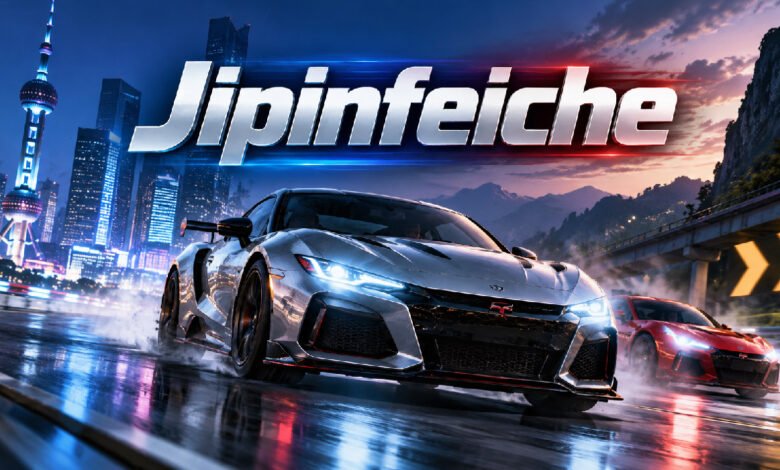
Jipinfeiche is a term that often appears in searches related to racing games, Chinese gaming websites, and the Need for Speed series. At first, the word may look like the name of an unfamiliar game, car brand, or Chinese concept. Its meaning becomes much clearer when the original Chinese characters are considered. Jipinfeiche is a romanized form of 极品飞车, the Chinese title associated with Electronic Arts’ Need for Speed racing franchise.
Understanding this connection is important because some explanations online give the term meanings that go far beyond its established gaming use. Jipinfeiche is best understood through language, localization, and video-game history rather than as a mysterious philosophy or independent lifestyle concept.
This guide explains what Jipinfeiche means, how to pronounce it, why it is connected with Need for Speed, and why different interpretations of the term appear online.
What Is Jipinfeiche?
Jipinfeiche is the Latin-letter form commonly used online for the Chinese title 极品飞车. In a gaming context, 极品飞车 is associated with the Need for Speed franchise. This means Jipinfeiche should generally not be understood as the name of a completely separate international racing series. Instead, it helps people identify or search for Need for Speed material that uses the Chinese title.
The term is especially useful for people who recognize the pronunciation but cannot easily type Chinese characters. Someone might see 极品飞车 in a Chinese gaming video, forum, game page, or social-media post and later search for it as “jipinfeiche.”
Context still matters. The basic term can refer to the wider franchise, while longer Chinese titles can identify particular games. For that reason, readers should check the complete title before assuming that every Jipinfeiche result discusses the same Need for Speed release.
What Does Jipinfeiche Mean in Chinese?
The Chinese title is written as 极品飞车. Understanding its components helps explain why it suits a racing franchise, although translating each character separately can produce unnatural English. 极品 can describe something excellent, outstanding, superb, or top-grade depending on the context. 飞 relates to flying or moving very quickly, while 车 means a vehicle or car. 飞车 can therefore create a strong impression of a vehicle moving at great speed.
Because of these meanings, translations such as “ultimate racing car,” “top-quality speeding car,” or even “ultimate flying car” sometimes appear online. None should automatically be treated as a precise official English translation.
The complete expression matters more than a rigid word-for-word rendering. In gaming, 极品飞车 functions as the established Chinese title associated with Need for Speed. The English franchise name remains Need for Speed rather than a literal translation assembled from the individual Chinese characters.
Is Jipinfeiche the Chinese Name for Need for Speed?
In the relevant gaming context, Jipinfeiche represents 极品飞车, the Chinese title used for Need for Speed. The relationship can initially be confusing because “Need for Speed” and “Jipinfeiche” look and sound nothing alike. This is normal in localization. A localized entertainment title does not always reproduce the original name word for word.
There are effectively several forms readers may encounter. Need for Speed is the familiar English franchise name. 极品飞车 is its Chinese title, while Jípǐn Fēichē represents the Mandarin pronunciation in standard pinyin. Online users frequently remove the tone marks and spaces, producing “jipinfeiche.”
These forms should therefore not be treated as evidence of several unrelated franchises. They can point toward the same broader gaming identity. Recognizing the connection is particularly useful when moving between English and Chinese search results, videos, game discussions, guides, and other online resources.
How Do You Pronounce Jipinfeiche?
The standard pinyin form of 极品飞车 is written Jípǐn Fēichē when Mandarin tone marks are included. Pinyin is a system used to represent Mandarin Chinese pronunciation with Latin letters. The marks above the vowels indicate tones, which are an important part of Mandarin pronunciation. When people type ordinary internet searches, however, those marks are frequently removed for convenience.
As a result, Jípǐn Fēichē may become “jipin feiche” or simply “jipinfeiche.” The joined version is particularly easy to mistake for a single English-style brand name. In reality, it is a romanized representation connected to the Chinese characters.
English pronunciation guides can provide only an approximation because Mandarin sounds and tones do not correspond perfectly to English. Readers interested in accurate pronunciation should therefore use the tone-marked pinyin and a reliable Mandarin pronunciation source rather than relying entirely on an English phonetic spelling.
Why Is Need for Speed Called Jipinfeiche in Chinese?
Video-game localization involves more than replacing one English word with its dictionary equivalent in another language. Publishers need titles that are understandable, memorable, and suitable for the market where a game is being presented. A successful localized title can communicate the general feeling of a game even when its wording differs considerably from the original name.
极品飞车 fits the identity of Need for Speed because its language creates associations with exceptional vehicles and rapid movement. Those ideas naturally suit a franchise centered on powerful cars and high-speed driving. The title therefore communicates a racing identity without needing to reproduce the English phrase “Need for Speed” literally.
This distinction is useful when researching other international games as well. Localization can produce names that appear unrelated until their market context is understood. In the case of Jipinfeiche, recognizing 极品飞车 as a localized franchise title explains why the Chinese and English names can look different while referring to the same broader series.
The History Behind Jipinfeiche and Need for Speed
Need for Speed began in 1994 and developed into one of Electronic Arts’ best-known racing franchises. During its long history, the series has appeared across different generations of gaming hardware and has changed significantly from one release to another. Some entries focus heavily on street racing, while others place more attention on exotic vehicles, police pursuits, open environments, customization, or competitive play.
As the franchise reached international audiences, localized branding became part of how players in different regions recognized it. 极品飞车 became the familiar Chinese title associated with Need for Speed, allowing the franchise to maintain a recognizable identity for Chinese-speaking audiences.
This long history also explains why a Jipinfeiche search can produce information about many different games. The term is connected to a franchise spanning decades rather than a single release. Older games and newer projects may share the broader franchise identity even though their gameplay, technology, locations, and available platforms can differ considerably.
Does Jipinfeiche Refer to One Game or the Entire Series?
Jipinfeiche can lead users to the wider Need for Speed franchise rather than identifying one specific installment. This is an important distinction because Need for Speed consists of numerous individual games. Searching only for Jipinfeiche may therefore return information about releases from very different periods, platforms, and parts of the franchise.
The situation becomes more complicated when additional Chinese words are attached to 极品飞车. A longer title may identify a particular product rather than the franchise generally. For example, 极品飞车:集结 is a more specific title associated with a mobile racing game in the Chinese market. It should not automatically be treated as the meaning of every search for Jipinfeiche.
Readers researching a particular game should look for its complete title, platform, release date, or subtitle. Doing so prevents information about one installment from being incorrectly applied to another and makes searches for system requirements, gameplay features, updates, and availability considerably more accurate.
Why Does Jipinfeiche Appear in English Search Results?
Jipinfeiche often reaches English-language users because pinyin makes Chinese words easier to search with a Latin-character keyboard. A player may first encounter 极品飞车 in a gameplay video, screenshot, Chinese website, online discussion, social-media post, or file name. If the player discovers its pronunciation, searching “jipinfeiche” becomes an easy way to investigate the unfamiliar title.
Search engines can also connect different forms of a name, meaning users may move between Need for Speed, 极品飞车, Jípǐn Fēichē, and jipinfeiche while researching the same general subject. This creates opportunities for confusion when the original context is missing.
The joined spelling is especially deceptive because it resembles a unique product or company name to someone unfamiliar with pinyin. Connecting it back to the original Chinese characters is therefore one of the most useful steps in understanding search results and separating reliable gaming information from unrelated interpretations.
Why Is There Confusing Information About Jipinfeiche Online?
Much of the confusion surrounding Jipinfeiche comes from separating the romanized spelling from its Chinese characters and gaming context. Without 极品飞车 beside it, “jipinfeiche” can look like an unexplained foreign word. Writers may then attempt to construct a broader meaning from individual Chinese characters or repeat definitions found on other websites without checking their original source.
This process can produce claims that Jipinfeiche is a lifestyle principle, symbol of luxury, productivity method, philosophy, or general label for exceptional people and products. Creative metaphorical uses are always possible, but they should not be confused with documented definitions or established historical traditions.
A safer method is to trace the romanized term back to 极品飞车 and examine reliable gaming material connected with the title. Primary publisher information and trustworthy language references provide a stronger basis for interpretation than multiple websites repeating the same unsupported explanation. Repetition alone does not establish a claim as fact.
Is Jipinfeiche an Ancient Chinese Philosophy?
There is no good reason to treat Jipinfeiche as an established ancient Chinese philosophy simply because its characters can carry ideas associated with excellence and speed. Chinese characters often contain meanings that can inspire creative interpretations, but those interpretations do not automatically establish the existence of a historical philosophy, movement, or cultural tradition with that name.
This distinction matters because a modern phrase can easily be given a philosophical interpretation after the fact. Someone could use speed as a metaphor for ambition, progress, freedom, or productivity, but that would be a new metaphorical use rather than proof that 极品飞车 historically represented those ideas.
For readers encountering dramatic claims about Jipinfeiche, the best approach is to look for credible historical or linguistic evidence. In the well-documented gaming context, the connection with Need for Speed is much clearer. Unsupported philosophical explanations should therefore be treated cautiously unless reliable evidence is provided.
What Makes the Need for Speed Franchise Recognizable?
Need for Speed has remained recognizable because it generally emphasizes exciting, accessible performance driving rather than limiting itself to traditional circuit-based motorsport. Individual releases vary greatly, but the franchise has repeatedly explored powerful cars, competition, speed, dramatic environments, vehicle progression, and different forms of arcade-oriented racing.
Street racing became especially important to the identity of several popular entries. Police pursuits have also played a major role in various releases, adding pressure as players attempt to escape while maintaining high speeds. Other games have emphasized vehicle customization, allowing players to modify the visual appearance or performance characteristics of their cars.
Not every feature appears in every Need for Speed game, so it is important not to describe the entire franchise as though every installment works identically. Its ability to change is part of its history. The Jipinfeiche name can therefore be associated with several different racing experiences depending on the specific title being discussed.
Cars and Customization in Jipinfeiche Games
Cars are central to the Need for Speed experience, and many releases feature licensed vehicles from well-known manufacturers. Depending on the individual game, players may encounter sports cars, muscle cars, tuners, exotic vehicles, supercars, and other performance-focused models. The exact selection changes from one release to another, making the complete game title important when researching available vehicles.
Customization is another feature strongly associated with many parts of the franchise. Some installments allow substantial visual changes involving paint, wheels, body components, decals, and other design elements. Performance upgrades can also influence acceleration, handling, braking, or other vehicle characteristics, although the depth of these systems varies by game.
Customization helps turn vehicle ownership into part of the progression experience rather than making cars simple tools for entering races. Players can develop preferences for particular models and builds. However, these features should be discussed on a title-by-title basis because customization options differ throughout the franchise’s long history.
Racing, Open Worlds, and Police Pursuits
Need for Speed has experimented with numerous race formats and environments. Depending on the installment, players may participate in circuits, point-to-point races, time-based challenges, drift events, or other forms of competition. Some games provide open environments where players can drive between activities instead of selecting every event directly from a traditional menu.
Police pursuits are another well-known element of the franchise, although they are not equally important in every release. In games where pursuits play a major role, players may need to escape police vehicles while navigating traffic, roads, obstacles, and changing pursuit conditions. This can create a different type of challenge from conventional racing.
These variations demonstrate why Jipinfeiche should be understood as a franchise-related term rather than a description of one fixed gameplay system. Two Need for Speed titles can have noticeably different structures while remaining part of the same series and appearing under the broader 极品飞车 identity in Chinese-language contexts.
Jipinfeiche on PC, Consoles, and Mobile Devices
Need for Speed has appeared across numerous gaming platforms during its history. Different installments have been released for PC and several generations of consoles, while the franchise has also expanded into mobile gaming. Platform support depends on the particular game, however, so a general statement that “Jipinfeiche is available” on a device does not necessarily mean every Need for Speed title can be played there.
Mobile gaming makes this distinction especially important. Need for Speed has had mobile-focused experiences, while the Chinese market also has specific titles carrying the 极品飞车 branding. These products should not be treated as identical to traditional PC or console installments simply because they belong to the same wider franchise identity.
Anyone searching for a game should therefore identify the exact title first and then check its supported platforms through an official publisher, platform holder, or legitimate store. This is more reliable than using “Jipinfeiche download” without specifying which game is actually wanted.
How to Research Jipinfeiche More Accurately
The simplest way to research Jipinfeiche is to use several versions of the name rather than relying only on the joined Latin spelling. Searching for 极品飞车 can reveal Chinese-language sources, while “Need for Speed” provides access to the much larger body of English-language information about the franchise. The pinyin forms Jípǐn Fēichē and jipinfeiche are useful when investigating how the Chinese title is written or discussed internationally.
For a specific game, add its complete title, release year, platform, or Chinese subtitle. This reduces the chance of mixing information from unrelated installments. Official publisher pages and recognized digital game stores are preferable when checking release details, platforms, or availability.
Language questions should likewise be checked against dependable Chinese-language resources rather than automatically accepting a literal machine translation. Community discussions can be useful for player opinions, strategies, modifications, and experiences, but they should not replace authoritative sources when establishing a title’s official identity or historical background.
Conculsion
Jipinfeiche becomes much easier to understand when the word is connected to its original Chinese form, 极品飞车. In gaming, this title is associated with the Need for Speed franchise, while Jípǐn Fēichē is its tone-marked pinyin representation. The simplified internet spelling “jipinfeiche” makes the title easier to type but can also make it look like an unrelated brand, product, or concept.
The most important distinction is between localization and literal translation. 极品飞车 does not need to translate word for word into “Need for Speed” for the two titles to represent the same franchise identity in their respective language contexts.
Readers should also distinguish the overall franchise from individual releases and avoid treating unsupported philosophical interpretations as facts. With those distinctions understood, Jipinfeiche is no longer a mysterious term. It is a useful example of how a famous international gaming franchise can acquire a distinct and recognizable identity in another language.
(FAQs)
What does Jipinfeiche mean?
Jipinfeiche is the romanized form of 极品飞车, the Chinese title associated with the Need for Speed racing game franchise. Its Chinese characters convey ideas related to exceptional quality, fast movement, and vehicles, but it should be understood as a localized game title rather than through a strict word-for-word translation.
Is Jipinfeiche the same as Need for Speed?
Yes, in the relevant gaming context, Jipinfeiche refers to 极品飞车, the Chinese title used for Need for Speed. Jipinfeiche is based on the Mandarin pronunciation of the Chinese characters, while Need for Speed is the familiar English franchise name.
How do you pronounce Jipinfeiche?
The standard pinyin form is Jípǐn Fēichē. Tone marks are important for accurate Mandarin pronunciation, but they are commonly removed in online searches. This is why users often type the simpler forms “jipin feiche” or “jipinfeiche.”
Is Jipinfeiche a separate racing game?
No. Jipinfeiche should not generally be treated as a separate racing franchise. It is associated with the Chinese name for Need for Speed. However, individual games can have additional Chinese titles or subtitles, so the complete game name should be checked when researching a particular release.
Is Jipinfeiche an ancient Chinese philosophy?
There is no reliable basis for presenting Jipinfeiche as an established ancient Chinese philosophy. Some websites give the term broader metaphorical meanings, but its clearly documented modern gaming context is its association with 极品飞车, the Chinese title for Need for Speed.

