
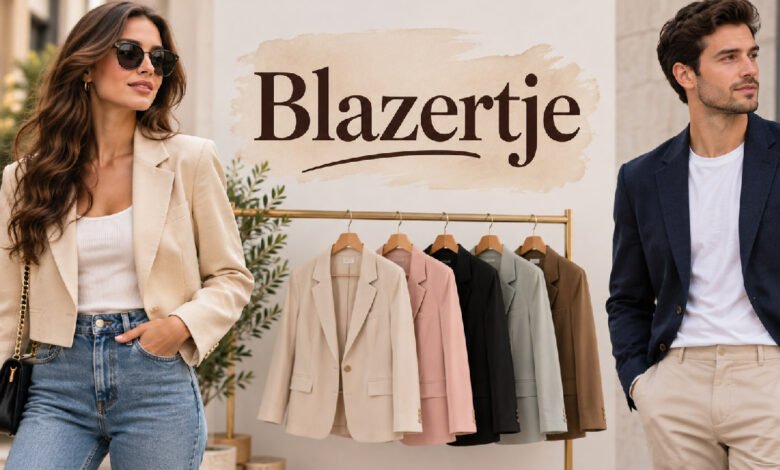
A Blazertje is a fashion term connected to the Dutch word “blazer.” In simple English, it can be understood as a “little blazer.” However, the word does not always mean that the jacket is physically small. It may also describe a blazer that looks lighter, softer, shorter, or more relaxed.
This type of jacket is useful because it can make a simple outfit look more polished without making it feel too formal. Depending on the design, a Blazertje can be worn with jeans, trousers, skirts, dresses, shirts, T-shirts, and light knitwear.
There is no single official design that every Blazertje must follow. Some are cropped and fitted, while others are long, oversized, or traditionally tailored. The fabric, color, cut, and styling all help decide how casual or smart the jacket looks.
What Does Blazertje Mean?
The word Blazertje comes from Dutch. It is made from the word “blazer” and the Dutch diminutive ending “-tje.” A diminutive can make a word sound smaller, lighter, friendlier, or less formal. Because of this, a direct English translation is often given as “little blazer.”
In everyday Dutch use, the term may simply refer to a blazer in an informal way. It should not automatically be understood as a separate official category of clothing with fixed rules about length, fabric, buttons, or fit.
In fashion descriptions, however, people may use the word for neat, lightweight, cropped, fitted, or casual blazers. The exact meaning can therefore depend on the clothing store, fashion writer, product description, or person using the term. Looking at the actual garment is more useful than relying only on the name.
Is a Blazertje Different From a Regular Blazer?
A Blazertje and a regular blazer can be very similar. The biggest difference is often the way the word is used rather than a strict difference in construction. “Blazertje” is a Dutch diminutive, while “blazer” is the more common English fashion term.
Some Blazertjes may have lighter fabrics, softer shoulders, shorter lengths, or a more relaxed shape. These features can make them easier to wear with casual clothing. However, not every jacket called a Blazertje will include all of these features.
A traditional blazer may sometimes look more structured, especially if it has firm shoulders, thicker fabric, lining, and strong tailoring. Even so, modern blazers are available in many relaxed forms. For that reason, shoppers should compare the actual cut, material, lining, and fit instead of assuming that every Blazertje is automatically softer or smaller.
Key Features Commonly Seen in a Blazertje
Many Blazertje designs combine the clean appearance of tailoring with the comfort of everyday clothing. They may include lapels, buttons, pockets, shaped seams, and a clear shoulder line while using lighter construction than a formal suit jacket.
Some styles have little or no shoulder padding. Others use soft fabrics that move more naturally around the body. The jacket may also be partially lined or completely unlined, although construction depends on the specific design and manufacturer.
Versatility is another common feature. A simple Blazertje can often work with casual denim in the daytime and smarter trousers in the evening. Some styles are close-fitting, while others intentionally have oversized proportions. There is no required length or shape, which is why checking the individual design is important before buying. The best choice is usually one that works naturally with clothes already in your wardrobe.
Most Popular Blazertje Styles
Blazertjes are available in many shapes. A cropped design normally finishes around the waist or upper hip. It can work especially well with high-waisted jeans, skirts, and trousers because the shorter jacket keeps more of the lower outfit visible.
Single-breasted styles usually have one row of buttons and offer a simple, classic appearance. Double-breasted versions have overlapping front panels and two button columns, creating a stronger and slightly more formal look. Tailored designs normally follow the waist and shoulders more closely.
Oversized Blazertjes have become another common styling choice. They have a roomier body and sometimes wider shoulders or longer sleeves. Longline designs extend farther below the hips and can create a cleaner vertical shape. None of these styles is automatically better. The best option depends on the look, comfort, and proportions that the wearer prefers.
Best Fabrics for a Blazertje
Fabric has a major effect on how a Blazertje feels and looks. Cotton and cotton blends are practical choices for everyday clothing because they can provide softness, durability, and a less formal appearance. The exact comfort level depends on the thickness and weave.
Linen and linen blends are often chosen for warmer weather because linen allows airflow and has a naturally relaxed appearance. It can wrinkle easily, but those wrinkles are often considered part of the fabric’s casual character. Lightweight wool can provide more structure while remaining comfortable.
Synthetic and mixed fabrics such as polyester or viscose blends are also common. They may help a jacket keep its shape or reduce wrinkling, depending on the material combination. Velvet, satin, and textured fabrics can create a dressier effect. Instead of choosing fabric only by appearance, consider weather, comfort, care instructions, and how often you expect to wear the jacket.
How to Choose a Blazertje for Each Season
A Blazertje can be worn during different seasons when the fabric and layering are chosen carefully. During spring, cotton, soft woven fabrics, and lighter blends can work well because temperatures may change throughout the day. A jacket also gives you an easy removable layer.
For summer, linen and lightweight cotton are generally more comfortable than heavy or thick materials. An unlined or lightly constructed blazer may feel cooler in warm conditions. Light colors can also create a fresh seasonal appearance, although color does not determine how breathable a fabric is.
During autumn and winter, wool blends, thicker woven materials, and layered outfits can provide more warmth. A Blazertje can be worn over a shirt, fine sweater, or turtleneck. In very cold weather, however, it usually works better as an indoor or middle layer rather than a replacement for a proper winter coat.
How Should a Blazertje Fit?
Good fit starts around the shoulders. In a traditionally fitted Blazertje, the shoulder seam should normally sit close to the natural edge of the shoulder. The fabric should not pull strongly across the upper back when you move your arms.
Check the chest and front next. If the jacket is designed to button, it should usually close without deep pulling lines around the button. Sleeves should allow comfortable movement and normally finish near the wrist, although cropped and intentionally long sleeves are also fashion choices.
Length depends on the design. Cropped jackets intentionally finish high, while longline and oversized versions fall lower. These styles should not be judged by the same fit rules as classic tailoring. Try moving your arms, sitting down, and wearing the jacket both open and closed. Comfort matters as much as appearance, especially for a jacket intended for regular use.
How to Choose a Blazertje for Your Personal Style
Instead of following strict body-shape rules, think about the silhouette you want to create. A cropped Blazertje can show more of the waist and may work well with high-rise bottoms. A longer jacket can create a more relaxed or streamlined appearance.
A fitted design gives greater waist definition and can look polished with trousers, skirts, or dresses. An oversized cut gives more space and often creates a casual, modern feel. Stronger shoulders can add structure, while softer shoulders create a gentler shape.
Your existing wardrobe should also influence the decision. Someone who mostly wears jeans and T-shirts may get more use from a relaxed neutral blazer. A person who regularly wears tailored trousers may prefer a cleaner structured design. Rather than buying a jacket only because it is fashionable, choose one that can easily be worn with several pieces you already own.
How to Style a Blazertje With Jeans
Jeans are one of the simplest pieces to combine with a Blazertje. A plain T-shirt, straight-leg jeans, and a neutral jacket can create an outfit that looks neat without feeling formal. Clean sneakers can keep the outfit casual.
Dark denim usually creates a slightly smarter appearance than heavily faded denim. Pairing dark jeans with a navy, black, beige, or gray Blazertje can work for dinners, casual offices, or other situations where you want a polished but relaxed outfit. Loafers or ankle boots can make the combination feel smarter.
Wide-leg and relaxed jeans can also work. When both the jeans and jacket are loose, wearing a simpler or more fitted top underneath can help give the outfit some visual balance. The goal is not to follow a strict rule but to make sure the different proportions feel intentional together.
How to Wear a Blazertje With Trousers
A Blazertje can easily create a business-casual look when paired with trousers. Straight or tailored trousers combined with a simple shirt and blazer can look professional without requiring a complete matching suit. Loafers, flats, boots, or other clean shoes can complete the outfit.
The jacket and trousers do not always need to match. A navy Blazertje can work with beige or gray trousers, while a black blazer can be combined with many neutral shades. Using related tones can create a softer, coordinated look.
Wide-leg trousers can also pair well with cropped or fitted jackets because the contrast in shape can make the outfit feel balanced. Oversized jackets can work with straight or wider trousers for a more relaxed style. Pay attention to fabric weight as well. Combining extremely heavy and extremely light materials can sometimes make the outfit feel disconnected.
How to Style a Blazertje With Dresses and Skirts
A Blazertje can add structure to a dress without changing its main character. A simple fitted blazer over a soft midi dress can create a balanced mix of tailored and flowing shapes. This combination can work for work, dinner, or daytime events.
Cropped styles often look natural with high-waisted skirts because they keep the waist visible. Longer jackets can work with fitted skirts or simple dresses and create a more relaxed outer layer. Oversized jackets can also add contrast to close-fitting clothing.
Color plays an important role. A neutral Blazertje can make a colorful or patterned dress easier to style, while a bright jacket can become the main feature of a simple outfit. Consider jacket length carefully. Different lengths can change the overall proportions of the outfit, so trying the complete look together is often better than judging each piece separately.
Blazertje Outfit Ideas for Different Occasions
For an everyday casual outfit, a Blazertje can be worn with jeans, a plain top, and sneakers. This works well when you want more structure than a cardigan or sweatshirt provides but do not want to look dressed for a formal event.
For business-casual settings, combine the jacket with tailored trousers, a simple shirt, knit top, or blouse. A cleaner fabric and well-fitting shape can make the outfit more professional. For dinner or social events, a Blazertje can also be layered over a dress or worn with darker trousers.
Travel is another situation where a soft, lightweight jacket can be useful because it adds a polished layer without requiring a full suit. However, dress codes should always be checked for formal events. A casual Blazertje may not be suitable when an occasion specifically requires a suit, tuxedo, or another formal standard.
How to Choose the Best Blazertje Color
Neutral colors are useful for people buying their first Blazertje. Black, navy, gray, beige, cream, and brown can usually be combined with many other wardrobe pieces. This makes them easier to wear repeatedly in different outfits.
Brighter shades such as red, green, pink, yellow, or blue can make the jacket a stronger visual feature. When wearing a bold blazer, simpler clothing underneath can help the jacket stand out without making the outfit feel too busy. Patterns can work in a similar way.
Checks, stripes, textured fabrics, and other prints can add interest to simple clothing. Before choosing a color, think about the trousers, jeans, skirts, dresses, tops, and shoes you already own. A jacket that matches several existing items is generally more practical than one that requires you to buy an entirely new outfit.
What to Look for Before Buying a Blazertje
Before buying a Blazertje, look beyond the color and overall design. Start by checking the shoulders, sleeves, chest, and length. Move your arms and sit down to see whether the jacket remains comfortable during normal movement.
Next, read the fabric label. The material can tell you a lot about warmth, breathability, care, and how the jacket may behave after repeated wear. Check whether the jacket is lined, partially lined, or unlined. Also examine seams, buttons, pockets, and stitching.
Think about where you will wear it. A jacket bought mainly for work may need a different cut from one intended for casual weekends. Care requirements also matter. A beautiful jacket that needs frequent specialist cleaning may not suit someone looking for easy everyday clothing. The best purchase combines comfort, useful styling options, suitable fabric, and a realistic level of maintenance.
How to Care for and Store a Blazertje
Always begin with the care label because different fabrics need different treatment. Some jackets can be carefully washed, while others may require professional cleaning. Following the manufacturer’s instructions is safer than using one cleaning method for every Blazertje.
Light wrinkles can often be reduced with gentle steaming if the fabric allows it. If ironing is permitted, use an appropriate temperature and avoid placing excessive heat directly on delicate materials. Small marks may sometimes be treated separately instead of washing the entire jacket.
When storing the garment, use a hanger that supports the shoulders without stretching them. Give the jacket enough space so it is not crushed between other clothes. Make sure it is clean and dry before long-term storage. Avoid unnecessary washing because repeated cleaning can wear fabrics faster. Proper care can help the blazer keep its shape and appearance for much longer.
Blazertje vs Blazer vs Suit Jacket
A Blazertje is closely related to a blazer and may simply be an informal Dutch way of referring to one. It is not automatically a completely separate garment category. Depending on context, it may suggest a smaller, softer, lighter, or more casual blazer.
A regular blazer is normally worn as a separate jacket rather than as one half of a matching suit. Modern blazers can be formal, casual, structured, relaxed, cropped, long, or oversized. This means that many garments described as Blazertjes could also simply be called blazers in English.
A suit jacket is different because it is usually designed as part of a matching suit with trousers or a skirt made from the same fabric. Wearing the matching pieces together creates the intended suit appearance. Understanding these terms helps shoppers avoid assuming that every tailored-looking jacket serves exactly the same purpose.
Common Mistakes When Choosing a Blazertje
One common mistake is buying a jacket that feels uncomfortable across the shoulders. A Blazertje may look attractive while standing still but become difficult to wear when sitting, reaching, or moving the arms. Always test normal movement before deciding.
Another mistake is choosing a style only because it is currently fashionable. An oversized blazer may look great in photographs but may not suit someone who prefers close-fitting clothes. The same is true for very cropped jackets or unusual colors.
People can also choose the wrong fabric for their climate. Heavy wool may be uncomfortable in warm weather, while thin linen may provide little warmth during colder months. Buying a jacket that does not match anything already in the wardrobe is another problem. Versatility should be considered alongside appearance, especially when the goal is to wear the jacket regularly rather than only once.
Why a Blazertje Works Well in a Modern Wardrobe
A Blazertje is useful because it can sit between very casual and very formal clothing. It gives an outfit some structure without automatically creating the appearance of a complete business suit. This makes it easy to adapt to different settings.
The same jacket can sometimes be worn with denim, trousers, skirts, dresses, shirts, T-shirts, or knitwear. Changing footwear and accessories can also change the overall mood. Sneakers create a relaxed result, while loafers, boots, or smarter shoes can make the outfit feel more polished.
Its usefulness ultimately depends on choosing the right design. A neutral, comfortable jacket that matches several existing outfits may become a regular wardrobe layer. A Blazertje does not need to be expensive, highly decorated, or unusual to be useful. Good fit, suitable fabric, and easy styling are usually more important than following short-lived fashion trends.
Final Thoughts
A Blazertje is best understood as a Dutch fashion term connected to the word “blazer.” Although it literally carries the idea of a smaller or friendlier form, it does not describe one strictly defined jacket style. Different Blazertjes can have very different cuts, fabrics, lengths, and levels of structure.
Some designs are cropped and fitted, while others are oversized, tailored, single-breasted, double-breasted, or longline. They can be worn with jeans for a relaxed outfit or combined with trousers, skirts, and dresses for a smarter appearance.
The best Blazertje is ultimately the one that fits comfortably and works with your lifestyle. Pay attention to shoulders, fabric, length, color, care needs, and the clothes already in your wardrobe. With the right choice, it can become a practical layer for many different outfits and occasions.
FAQs
What is a Blazertje?
A Blazertje is a Dutch term linked to the word blazer. It can mean a smaller, lighter, softer, or more casual blazer, depending on how the word is used in fashion.
Is a Blazertje different from a normal blazer?
Not always. In many cases, Blazertje is simply an informal Dutch way of saying blazer. Some fashion stores may use it for cropped, fitted, lightweight, or relaxed blazer styles.
Can you wear a Blazertje with jeans?
Yes. A Blazertje works very well with jeans. You can wear it with a plain T-shirt, straight jeans, and sneakers for a clean and relaxed smart-casual look.
What is the best fabric for a Blazertje?
The best fabric depends on the season. Linen and cotton are useful for warmer weather, while wool and thicker blends are better for cooler months. Fabric choice also affects comfort, shape, and care.
Can a Blazertje be worn to work?
Yes. A Blazertje can be a good choice for business-casual workplaces. Pair it with tailored trousers, a simple shirt, blouse, or knit top for a polished but comfortable outfit.

